Stormwater Utility Case Study
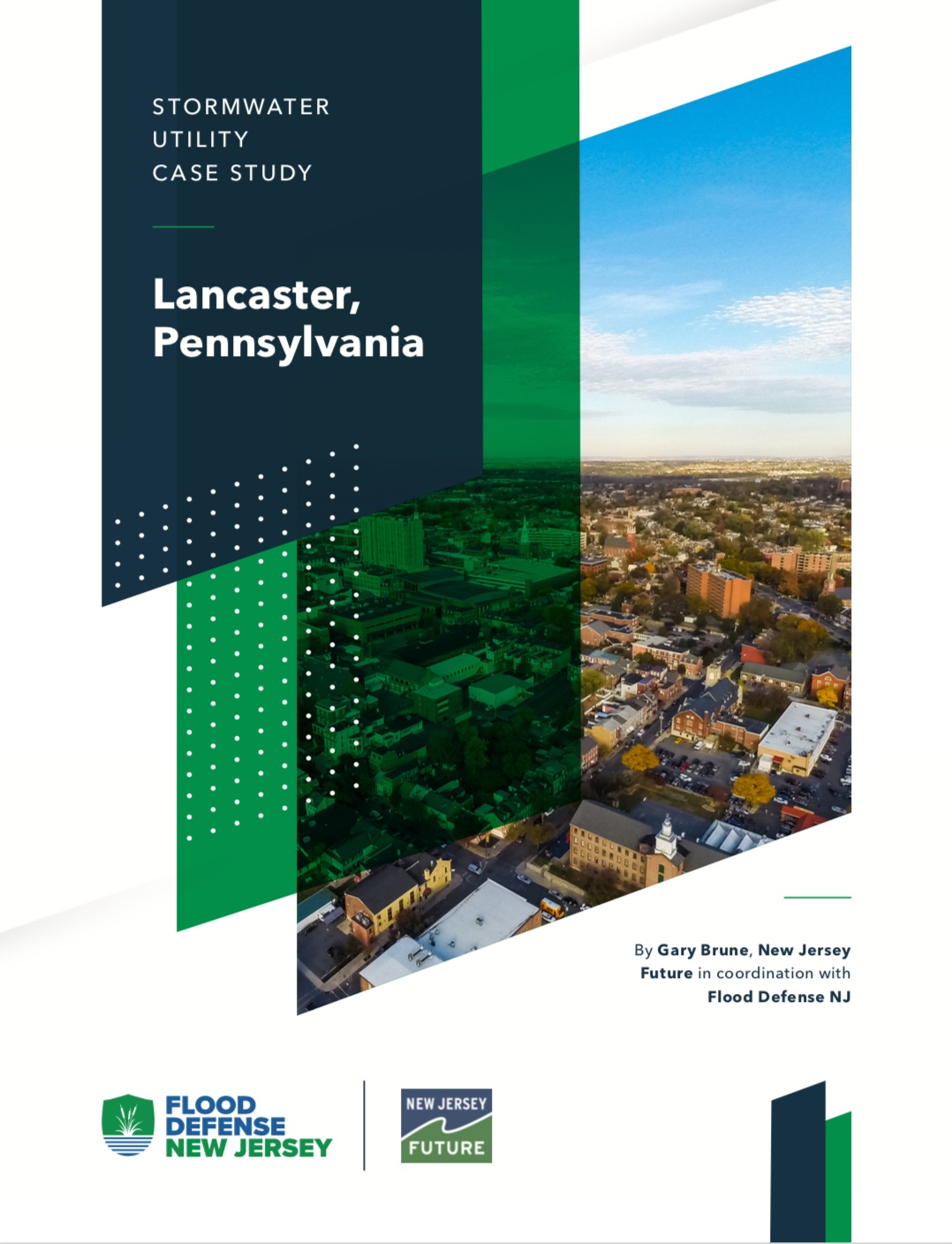 Stormwater Utility Case Study: Lancaster, Pennsylvania
In 2014, Lancaster, Pennsylvania, adopted an ordinance creating a stormwater utility to keep its separated storm sewers in a state of good repair, address flooding issues, and avoid stiff fine for non-compliance of its CSO permit. This case study by New Jersey Future provides an overview of how the stormwater utility and the fee imposed to fund it were developed and adopted.
Click the link below to download a copy of the case study.
Lead in Drinking Water: A Permanent Solution for NJ
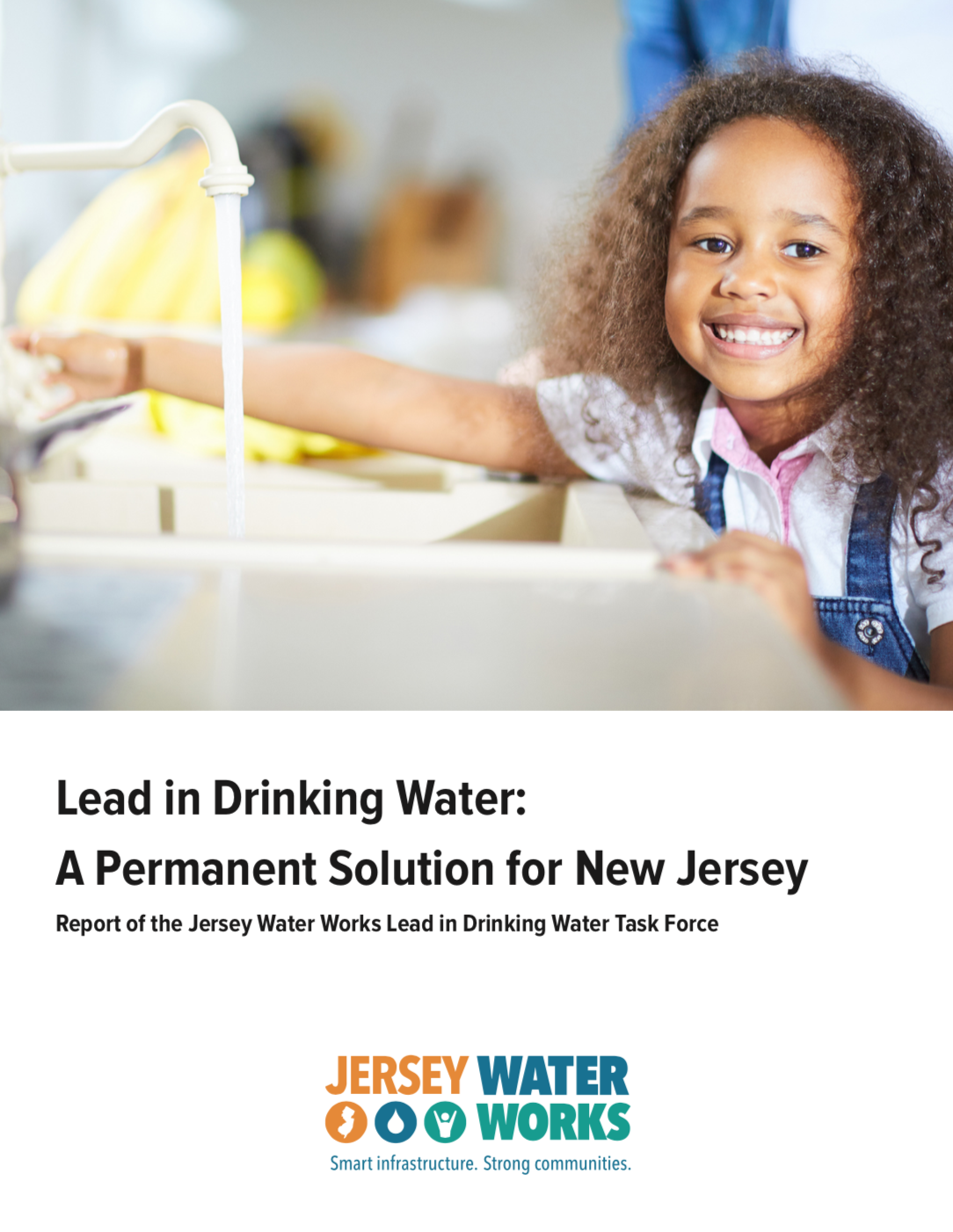 Lead in Drinking Water: A Permanent Solution for New Jersey
This report from the Jersey Water Works Lead in Drinking Water Task Force lays out 19 interdependent actions which, as a package, the Task Force expects can virtually eliminate lead in water within 10 years. One key recommended action is the replacement of lead service lines under privately owned property, a localized infrastructure issue. The report recognizes that drinking water utilities are on the front lines and need funding solutions and other tools from state government; many of the recommended actions address this reality.
Click below to download a copy of the report.
Moving Toward a Multi-Benefit Approach for Water Management
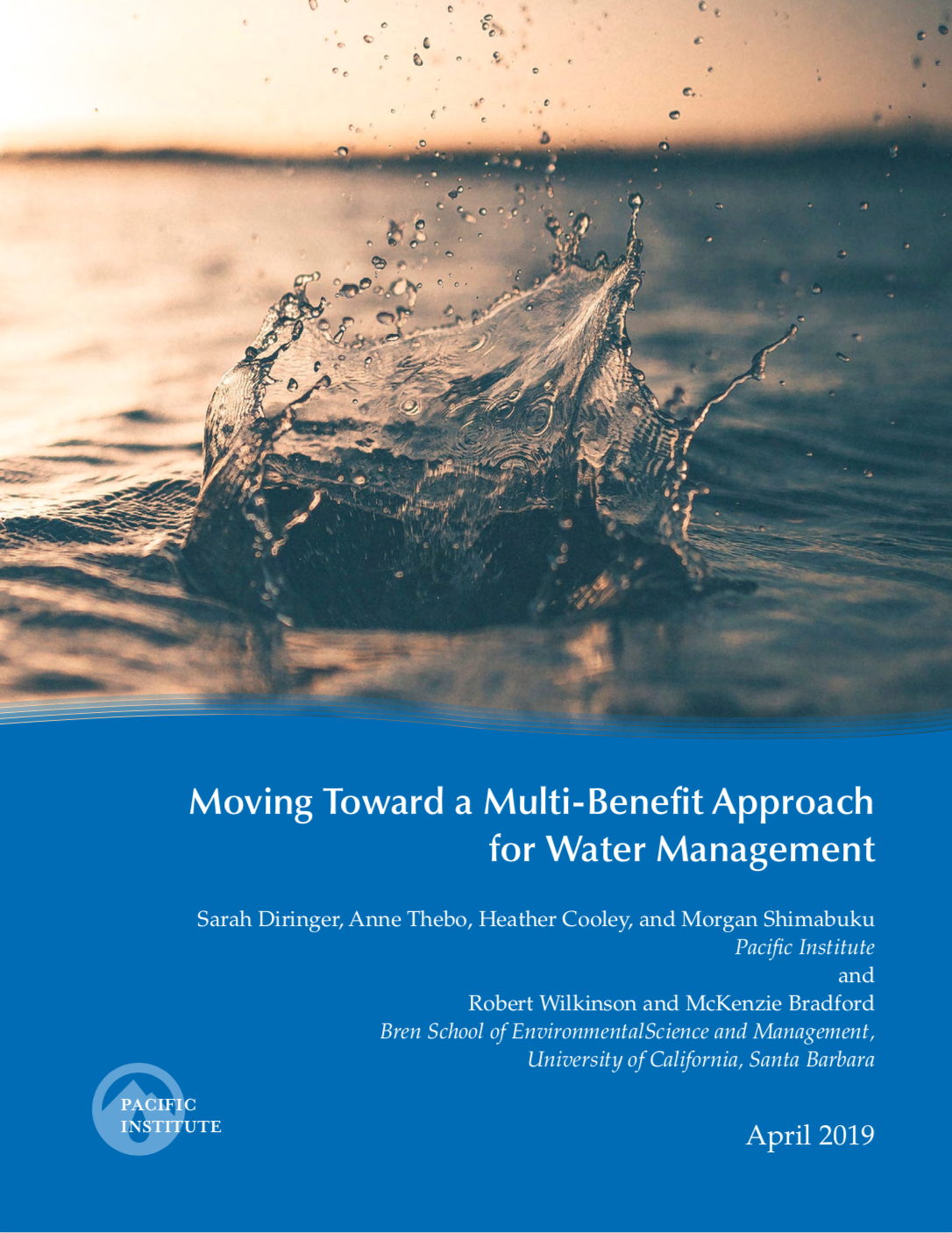 Authored by: Pacific Institute and Professor Bob Wilkinson of the University of California, Santa Barbara
Our partners at the Pacific Institute and collaborator Professor Bob Wilkinson are developing a framework for incorporating multiple benefits of water projects into decision-making. The draft multi-benefit framework, released in April 2019, outlines a process for engaging with stakeholders to systematically evaluate and incorporate the broad benefits and trade-offs of water management options into decision-making. It is now being applied through test cases to help expand the usefulness and reach of the framework.
To access the Phase 1 report click the link below.
Overview of Clean Water State Revolving Fund Eligibilities
Overview of Clean Water State Revolving Fund Eligibilities
 This 2016 EPA report details the wide variety of water quality protection efforts the Clean Water State Revolving Fund program can fund, including water conservation and efficiency and distributed green infrastructure. Click below to download the report and learn more.
Lifelines: The Resilient Infrastructure Opportunity
 Lifelines: The Resilient Infrastructure Opportunity
Hallegatte, Stéphane, Jun Rentschler, and Julie Rozenberg. 2019. Lifelines: The Resilient Infrastructure Opportunity. Sustainable Infrastructure Series. Washington, DC: World Bank. doi:10.1596/978-1-4648-1430-3. License: Creative Commons Attribution CC BY 3.0 IGO
This report from the World Bank Group finds that investing $1 in more resilient infrastructure is beneficial in 96 percent of thousands of scenarios exploring possible future socioeconomic and climate trends. The authors cite localized water solutions such as rainwater harvesting and decentralized water treatment systems among the types of resilient infrastructure that contribute to these benefits.
Click the link below to download the full report.
County-Scale Rainwater Harvesting
 County-Scale Rainwater Harvesting Feasibility in the United States: Climate, Collection Area, Density, and Reuse Considerations
Mounir William Ennenbach, Paulina Concha Larrauri , and Upmanu Lal
Roof rainwater harvesting has the potential to augment water supplies for urban and suburban uses throughout the United States. Studies of the performance of roof rainwater harvesting at the building and city scales in the U.S. are available, but a countrywide overview of the potential at the county scale has not been done before. This study aims to fill that gap by providing a county-level analysis of the potential of roof-based rainwater harvesting for urban water use in the U.S. by assessing the viability of roof rainwater harvesting as a water resource in each county, evaluating the performance of a “typical” roof rainwater harvesting system in each county, and evaluating the effect of adding a water reuse element to the “typical” roof rainwater harvesting system analysis.
Case Studies on New Water Paradigm
 Sustainable Water Resources Management, Vol 3: Case Studies on New Water Paradigms
Electric Power Research Institute (EPRI), Water Environment Research Foundation (WERF), and Tetra Tech
This report identifies and evaluates the foundation and requirements for sustainable water infrastructure at the community and watershed scales. The report is intended for stormwater, wastewater, water supply sectors, as well as the electric power sector. The project looked at two communities, Tuscon, AZ, and Northern Kentucky.
Innovative and Integrated Stormwater Management Report
Innovative and Integrated Stormwater Management Report
NYC Department of Environmental Protection
The New York City Department of Environmental Protection (DEP) owns and operates one of the largest wastewater and stormwater collection systems in the world including a combined sewer system. To develop and create the most effective stormwater management program possible, DEP looked to its peers in other municipalities to understand which methods have been successful in implementing stormwater management programs and meeting regulatory requirements. This report provides an overview to enable communities to make informed and effective decisions for our community as we continue to develop and implement our stormwater management program.
Alternative Ways to Fund Innovation and Water
 Tapping Into Alternative Ways to Fund Innovation and Multi-purpose Water. Projects: A Financing Framework from the Electricity Sector
Authored By:
Kim Quesnel, Stanford
Newsha K. Ajami, Ph.D, Stanford
Noemi Wyss, University of California, Irvine
In this report, the authors examine case studies of successful distributed energy projects and identify the tools used to develop, finance, and implement these solutions. The report develops a financing framework that could assist the water sector transition to include distributed infrastructure solutions.
Blueprint for One Water
Blueprint for One Water presented by the Water Research Foundation
Authored By:
Cindy Paulson, PE, PhD, Principal Investigator
Wendy Broley, PE, Co-Principal Investigator
Lynn Stephens, PE, Co-Principal Investigator
This blueprint explores critical steps for developing One Water approaches, case studies for utilities that have taken innovative one water approaches, methods for overcoming potential barriers, and key outcomes. Intended to guide One Water planning, this report documents and guides utilities, cities, counties, municipalities, water professionals, and other stakeholders across drinking water, wastewater, stormwater, reuse, watershed management, stormwater, and energy and resource recovery.