Philadelphia Water Department: Stormwater Credit Explorer
Philadelphia Water Department: Stormwater Credit Explorer
What is the Stormwater Credits Explorer?
Philadelphia Water Department offers a number of incentives to encourage property owners to retrofit their property and install green stormwater infrastructure (GSI) to manage stormwater onsite, and has worked with businesses (both small and large), faith-based institutions, hospitals, and other nonprofits over the past decade interested in adding these cost-saving GSI to their buildings and grounds. PWD’s Stormwater Management Guidance Manual, a start-to-finish guide for retrofits and new development, includes instructions for picking the best GSI tools, standard details for easy design,  ongoing GSI maintenance requirements, and detailed information on available grant programs.
As a digital complement to the Stormwater Guidance Manual, PWD also offers the Stormwater Credits Explorer—an app that virtually adds GSI tools to non-residential properties and calculates potential savings on their stormwater bill through the Credits Program. Launched in 2015, the user-friendly, web-based tool makes it easy (and fun) for non-residential property owners to see the financial benefits of GSI features like green roofs and porous pavement. The Credits Explorer turns any non-residential property into a canvas where a user can sketch out ideas of up to 5 different types of “Stormwater Tools,” including Green Roofs and Rain Gardens, Permeable Pavers and different types of storage basins. The tools enable users to lay out potential changes while keeping realistic limits for that given property. As Stormwater Tools are added or removed, the application updates the monthly stormwater charge for that property. Users can rapidly get a sense of the feasibility and effectiveness of adding stormwater infrastructure systems.
The Credits Explorer, and the retrofit incentives, are part of the city’s 25-year, $2.5 billion Green City, Clean Waters plan to manage stormwater and protect watersheds.
Stormwater Credits Explorer: Encouraging Participation in PWD Green Stormwater Infrastructure Retrofit Programs
The Stormwater Credits Explorer is designed to encourage more commercial property owners to apply for PWD stormwater grants, build distributed green infrastructure, and receive credits to reduce their stormwater bills. 
In Philly, all properties pay a stormwater fee; the residential fee is flat, and the non-residential fee is based on the property’s size and the amount of impervious surface it contains. The Water Department transitioned from a meter-based stormwater charge to a parcel-based stormwater charge in 2010. These fees not only help fund Green City, Clean Waters projects but also help the city comply with state and federal water quality regulations.
PWD used a manual process to estimate potential credits customers might receive if they were to reduce the impervious area on their property by installing GSI features. In other words, PWD staff were doing the credits calculations by hand.
To streamline and automate the process, PWD developed the Stormwater Credits Explorer. With the Credits Explorer non-residential, condominium, and multi-family properties with more than four units—the types of properties eligible to receive stormwater grants and credits—can virtually imagine how GSI like green roofs, permeable pavement, rain gardens, or subsurface storage would reduce the impervious area of their property and calculate how much money they could save in PWD fees. The target end-users are non-residential properties with large amounts of impervious surfaces that contribute stormwater runoff to the sewer system.
The Stormwater Credits Explorer not only drives participation in PWD incentive programs and helps property owners save money, this innovative tool benefits PWD. The more non-residential property owners that install GSI to keep stormwater out of the city’s combined sewer system the closer Philadelphia will be to achieving the objectives of its Green City, Clean Waters plan—a 25-year plan to reduce the volume of stormwater entering the city’s combined sewers using green infrastructure and to expand stormwater treatment capacity with traditional infrastructure improvements. As of August 2021, PWD incentives for private non-residential property have created 740 greened acres. (A “greened acre” is an acre of previously impervious area that is reconfigured to utilize GSI to manage at least one inch of stormwater runoff or ~30,000 gallons of stormwater.) And in 2021 Fall, $20 million in grants will be given to private and non-city-owned properties for installing green stormwater infrastructure. PWD anticipates that continued, and increased, use of the Stormwater Credits Explorer will lead to even more retrofits and greened acres.
How Does the Stormwater Credits Explorer Work?
The Stormwater Credits Explorer is an online, interactive way for commercial property owners to add Stormwater Tools to their non-residential properties and calculate potential savings on their stormwater bill. 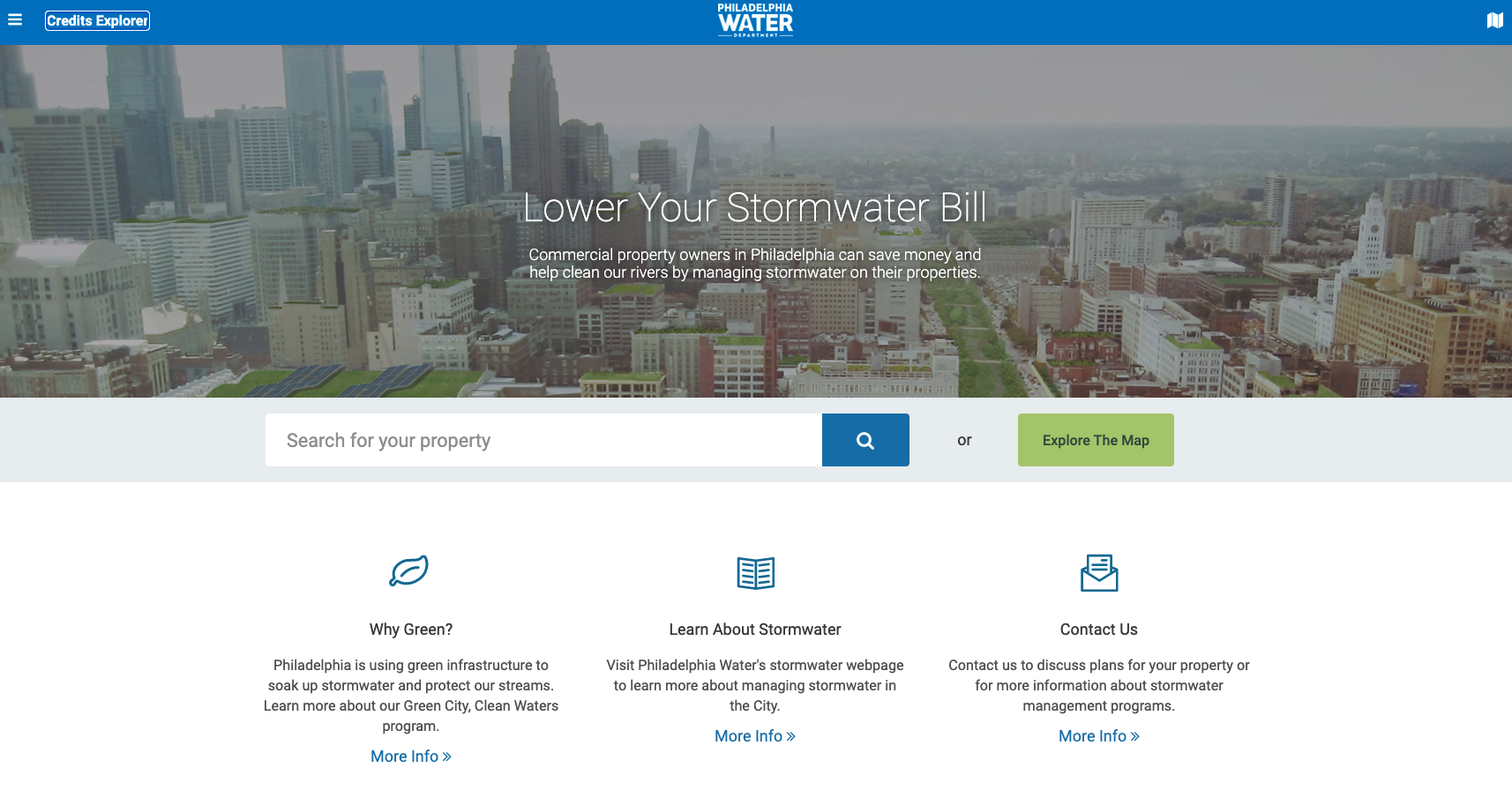
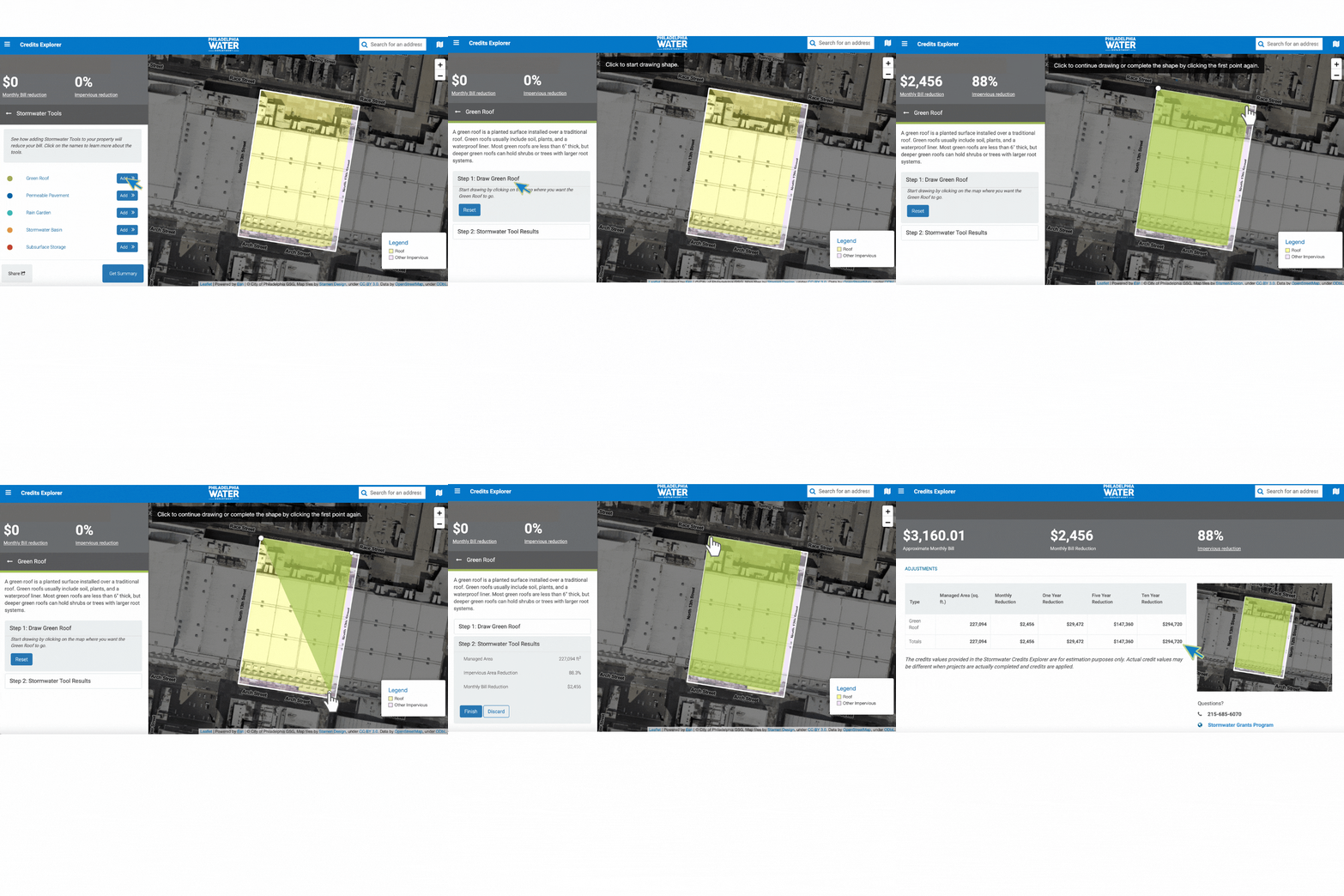
To start, users can either search by address or explore the map. From the map, owners can select their property, see their approximate monthly stormwater bill, and the gross and impervious area of the parcel. To explore how the property owner could reduce impermeable surfaces on the selected property, they click the “Explore Stormwater Tools” button and can then add a variety of GSI strategies, including Green Roof, Permeable Pavement, Rain Garden, Stormwater Basin, and Subsurface Storage. Adding these GSI strategies is as easy as clicking on the marked impervious surfaces of the parcel.
For example, to add a Green Roof use the cursor to select the roof areas of the property and close the “polygon” to draw the desired Green Roof area. The Stormwater Credits Explorer then calculates the managed area, the impervious area reduced, and the estimated monthly bill reduction. Any combination of the GSI solutions can be added using this same process.
After the suite of GSI strategies are selected, users can see a summary of the results showing their one-year, five-year, and ten-year estimated reduction in stormwater fees. The example below shows that by adding a Green Roof to the property to manage 227,094 square feet, the property owner stands to save nearly $300,000 over ten years. As a commercial property, this owner may also be eligible for a PWD grant to defray the cost of installing the Green Roof.
Grant recipients include a hardware store that installed a rain garden, a children’s hospital that installed a green roof and ground level plaza that captures stormwater, and a historical society that installed a rain garden and courtyard. PWD estimates that on average property owners’ monthly stormwater charges could be cut by 50% or more after installing green infrastructure.
Property owners interested in pursuing the savings identified through the Stormwater Credits Explorer can use the Stormwater Management Guidance Manual to get instructions for picking the best GSI tools for their site, find standard details for easy design, ongoing GSI maintenance requirements, and detailed information on available grant programs. In this way, the Credits Explorer is designed to put commercial properties, and PWD, on the path towards widespread installation of GSI throughout Philadelphia.
Building the Stormwater Credits Explorer for PWD
In order to build out this tool, PWD engaged with Azavea, a Philadelphia based professional services firm that builds geospatial web applications. Azavea was a firm that had already worked successfully with PWD in the past, building out internal management tools to manage their stormwater credit and appeals program. Initially the idea was to build GSI tools into the existing parcel viewer application, but after working with Azavea on a few design and architecture iterations, it was decided that creating a separate Credit Explorer tool would best fit PWD’s needs.
The key data layers that feed into this application include:
 Satellite imagery of Philadelphia (produced by the city annually)
PWD billing data (specific billing calculation for Philadelphia, accounting for potential credit impact)
Parcel layer data (created by PWD’s Stormwater Management Program)
Impervious area data (maintained by PWD Stormwater Management Program).
Given Azavea’s previous experience building internal management tools for PWD, they started this project with a deep understanding of these data layers. They also brought with them strong past experience building user-friendly mapping tools.
Since the 2015 launch of the platform, PWD and Azavea continue to work closely to maintain this application. Led by a project manager and a team of software engineers, Azavea updates software libraries, fixes bugs, and swaps-in the latest satellite imagery layer as they are made available. PWD’s team of GIS specialists, engineers, and city planners work together to ensure the tool is accessible to customers and updated as needed to incorporate any changes in the structure of the credits program.
Lessons Learned
Limit the application to just a tool
The importance of content prioritization was one of the key lessons learned while building this application. In the initial designs, PWD shared ideas for more content on the site including copy outlining the credits program and explanations of best management practices for stormwater. With the guidance of Azavea’s User Experience Design team, this content was eventually removed as it did not contribute to the interactive experience of the application. PWD wanted to be able to update the content on their own without involving Azavea. They therefore decided to maintain this information on a separate page of the water department's website that included content management features that the PWD staff themselves could update. The Credit Explorer page, in turn, narrowed its focus to the interactive tool itself.
Selection of software libraries
Azavea has used numerous software libraries to update and maintain this application. Some have been fundamental in improving the functionality of the application, while others have been quickly abandoned after initial testing. These learnings and iterations could easily be transferred to a new water department looking to build out a similar application to encourage GSI in their city.
Sources
Philadelphia Water Department: Stormwater Credits Explorer
Philadelphia Water Department: Green City, Clean Waters
Philadelphia Water Department: Stormwater Grants
Philadelphia Water Department: Stormwater Billing & Retrofits
Philadelphia Water Department: Green City, Clean Waters Growing with Local Business (Blog)
Azavea: Cutting costs and cleaning rivers
Sustainable Business Network Citywide Stories: An Unexpected Philly Partnership Is Leading the Way for Stormwater Management Across the Country
Next City: New Philly App Turns Saving Water Into Addictive Game
Optimizing the Structure and Scale of Urban Water Infrastructure
 Optimizing the Structure and Scale of Urban Water Infrastructure: Integrating Distributed Systems
In March 2014, the Johnson Foundation at Wingspread partnered with the Water Environment Federation and the Patel College of Global Sustainability at the University of South Florida to convene a diverse group of experts to examine the potential for distributed water infrastructure systems to be integrated with or substituted for more traditional water infrastructure, with a focus on right-sizing the structure and scale of systems and services to optimize water, energy and sanitation management while achieving long-term sustainability and resilience. Participants at the March 2014 meeting identified five principles for successful implementation of distributed systems, to help utility managers evaluate alternatives for improving, expanding or revamping their infrastructure. With the goals of sustainability and resilience in mind, these principles create space for the successful integration of distributed infrastructure into existing water systems.
Click below to access the Convening Report and read more about the key principles for and benefits of implementing distributed infrastructure.
WaterSMART Notice of Funding Opportunity
WaterSMART Drought Response Program: Drought Resiliency Projects for Fiscal Year 2022
The WaterSMART (Sustain and Manage America’s Resources for Tomorrow) Program leverages Federal and non-Federal funding to work cooperatively 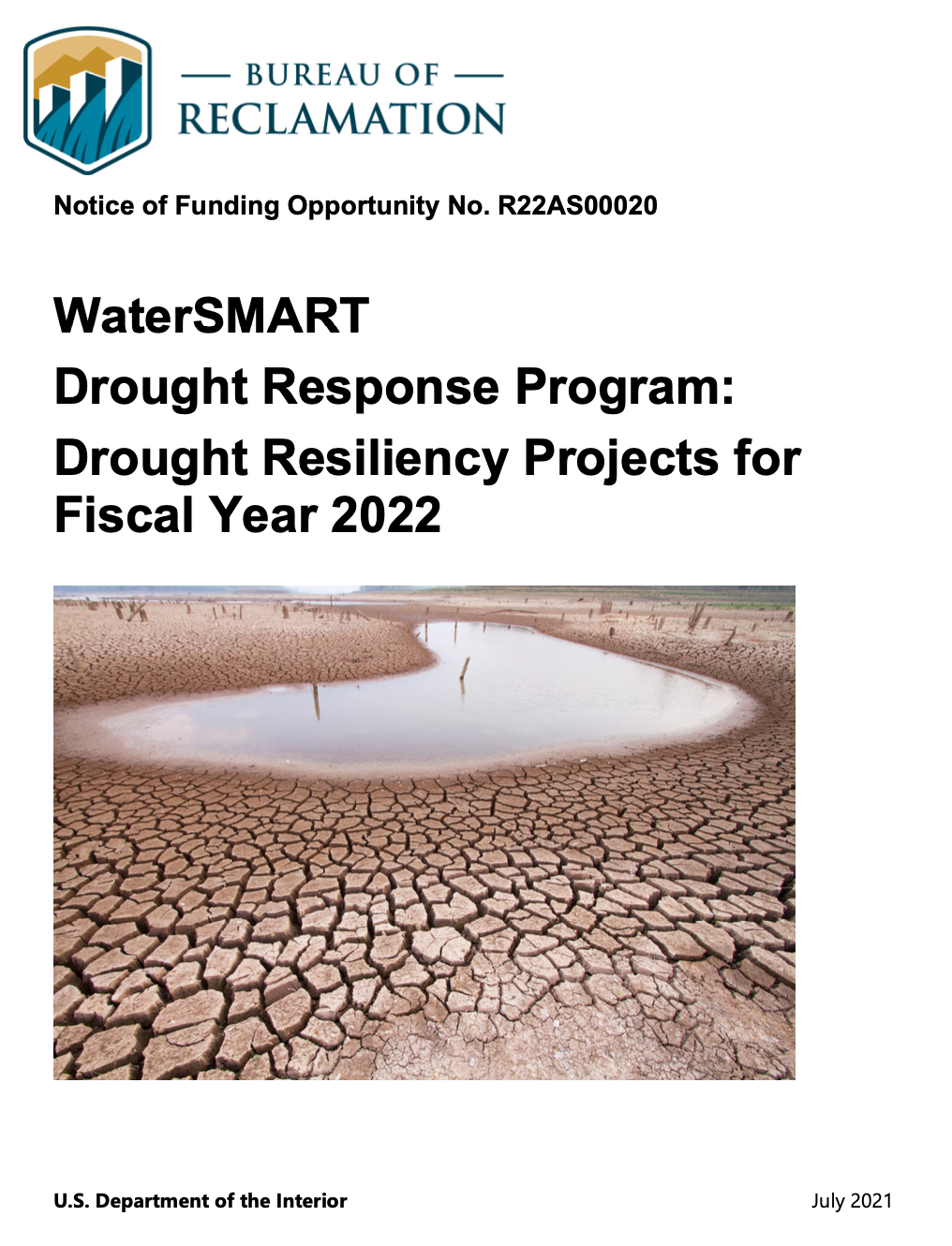 with States, Tribes, and local entities as they plan for and implement actions to increase water supply reliability through investments in existing infrastructure and attention to local water conflicts. This Notice of Funding Opportunity (NOFO) supports Drought Resiliency Projects that will build long-term resilience to drought and reduce the need for emergency response actions. These projects are generally in the final design stage—environmental and cultural resources compliance may have been initiated, and the non-Federal funding, necessary permits, and other required approvals have been secured.
The objective of this NOFO is to invite eligible applicants to leverage their money and resources by cost sharing with Reclamation on Drought Resiliency Projects that will increase the reliability of water supplies; improve water management; and provide benefits for fish, wildlife, and the environment to mitigate impacts caused by drought. Eligible projects include constructing stormwater capture and reuse systems, including green stormwater infrastructure solutions such as rain gardens, cisterns, and bioswales.
Click the link below the download the FY22 Drought Response Program NOFO.
Jefferson County Open Space Resiliency Framework
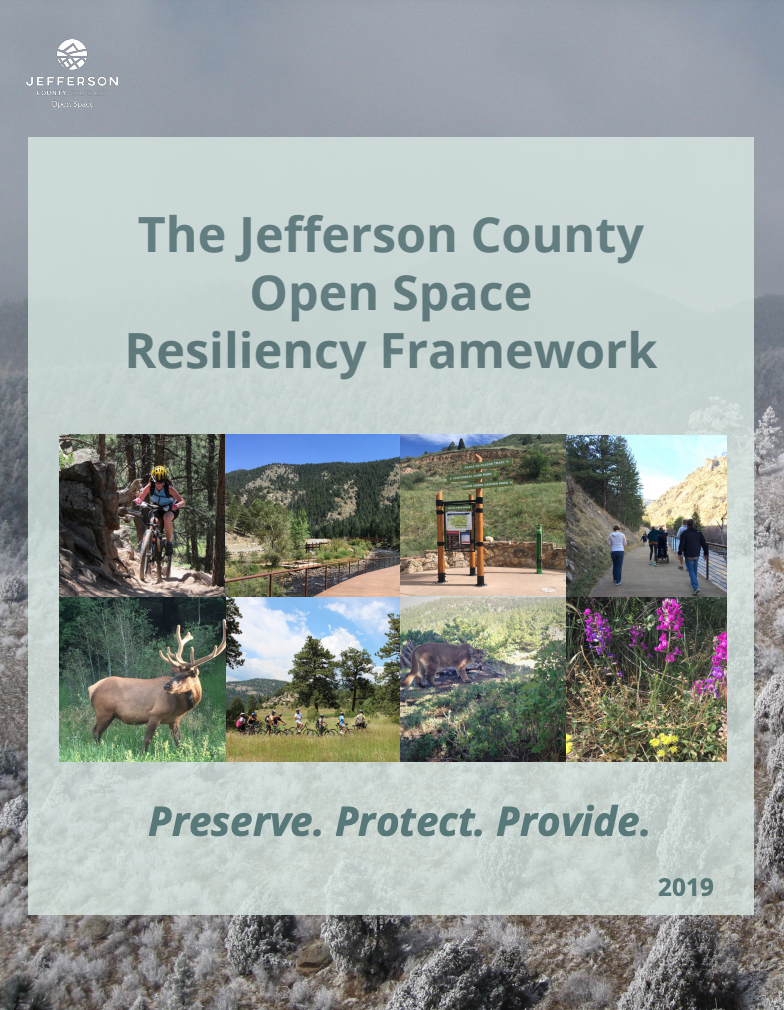 Jefferson County Open Space Resiliency Framework
The mission of Jefferson County Open Space (JCOS) is to preserve open space and parkland, protect park and natural resources, and provide healthy, nature-based experiences. The Jefferson County Open Space Resiliency Framework was developed to help JCOS prioritize projects and management strategies to increase social, ecological, and built infrastructure resilience within the park system. The Framework is not a management prescription. It illustrates a vision of resiliency, evaluates existing conditions within the park system, and provides a proactive, decision making tool to prioritize projects and management strategies based on a resilience score.
Click the link below to download the framework.
Stacked Incentives: Co-Funding Water Customer Incentive Programs
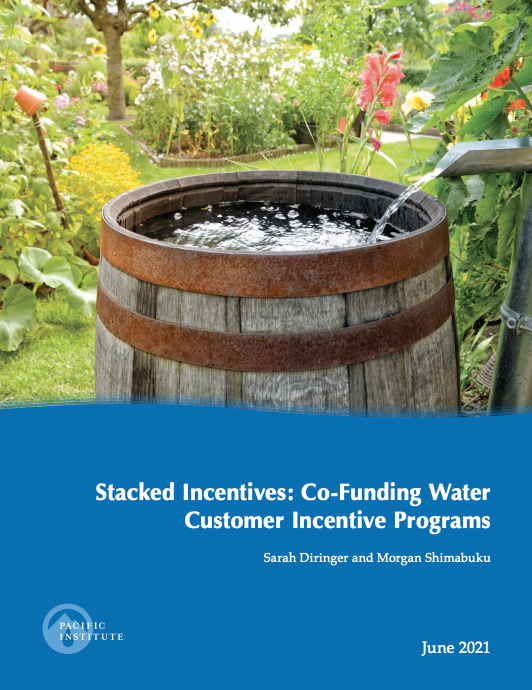 Stacked Incentives: Co-Funding Water Customer Incentive Programs
Authored by: Sarah Diringer and Morgan Shimabuku
Water utilities throughout the United States offer customer incentives to motivate action and foster engagement with their customers. Stacked incentives are customer incentive programs that are co-funded by two or more separate entities to motivate voluntary action on public or private property. Pacific Institute's report defines stacked incentives, highlights successful examples throughout the United States, and identifies best practices for water utilities and other organizations to collaborate on these programs.
Click the link below to download the report.
Putting Green to Work
Putting Green to Work
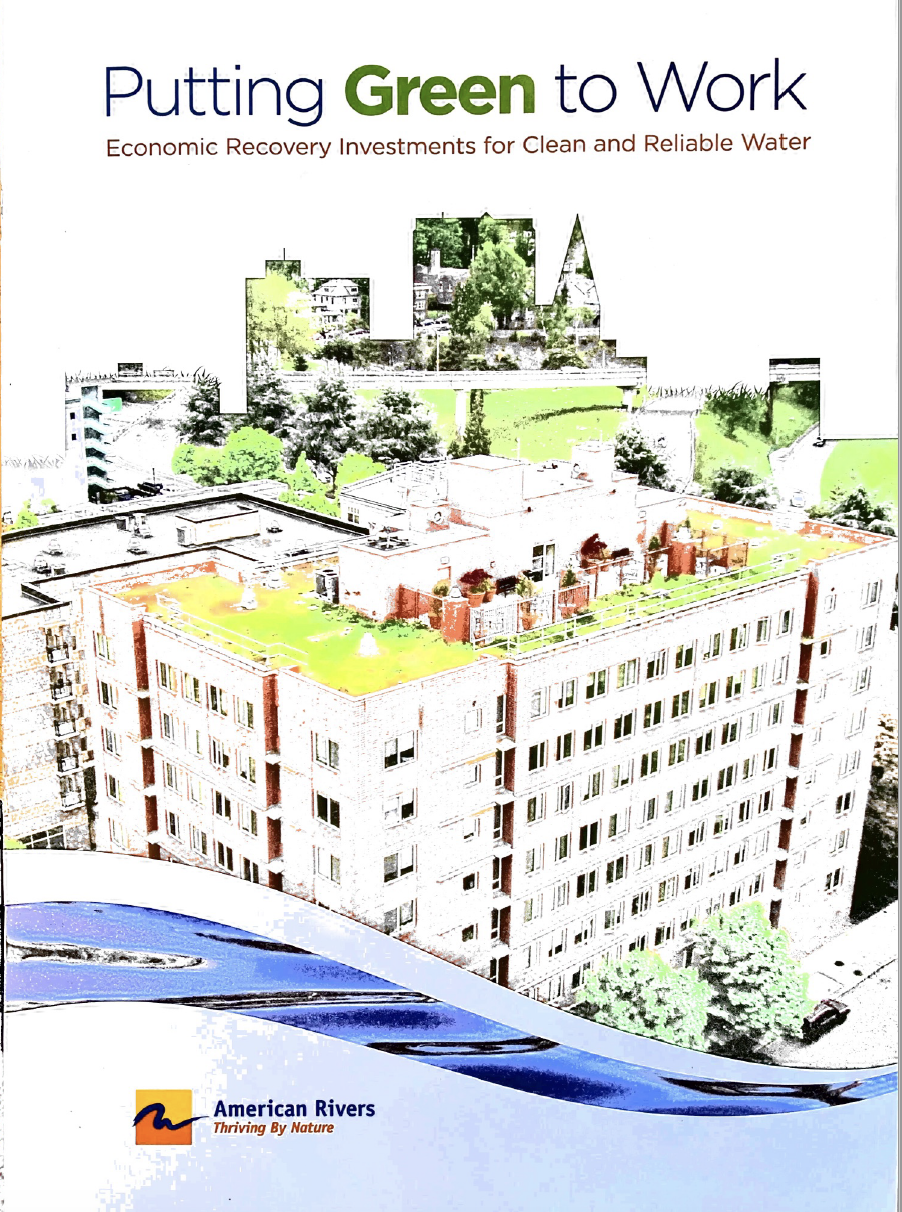 “We are in dire need of a new approach to investing in America’s clean water and drinking water infrastructure”. American Rivers 2011 finds that need for funding for “green” projects is far greater than the 20% provided for this effort. States have substantial lists of green projects that lack funding. Within the overall category of “green” we identified a group of projects providing a comprehensive set of environmental and economic benefits. Model states (New York and Maryland) shall be studied by others. States must act quickly to remove statutes and regulations to pursue integrated approaches to bright green infrastructure, and the benefits wished to be seen must be written into project evaluation criteria. Read more from Putting Green to Work: Economic Recovery Investments for Clean and Reliable Water.
South Carolina CWSRF Priority Ranking System
South Carolina CWSRF Priority Ranking System
 The South Carolina Department of Health and Environmental Control (DHEC) is the designated state agency to apply for and administer the capitalization grant for South Carolina’s CWSRF. The South Carolina Budget and Control Board (BCB) Office of Local Governments conducts financial functions of the CWSRF, establishes financial policies and executes loans to project sponsors. DHEC and the BCB distribute funds through low-interest loans and principal forgiveness loans. The following priority ranking system shares the first question that DHEC will ask: “how will the project help enhance water quality?” followed by everything else you’ll need to know about the SCCWSRF. EPA has identified seven priority watersheds in South Carolina. Both EPA and DHEC will prioritize the use of discretionary resources in these areas: Saluda, Middle Savannah, Black Creek, Sewee-Santee, May River, Okatie River, and Lower Edisto. The Priority Ranking Criteria is split into sections that show the state’s and nation’s priorities (Will the project address a water quality impairment of a waterbody that is identified on the current 303(d) list?)
South Carolina GPR Guidance
South Carolina GPR Guidance
 Projects that are not considered “categorical” may still qualify for the GPR. Such “business case” projects must be evaluated for their eligibility within one of the four targeted types of GPR eligible projects based upon a business case argument. The business case should provide a cost/benefit analysis, estimated project life and payback period, supporting calculations, and any supporting documentation. See the following excerpt from EPA’s GPR guidance to learn more about how to present a business case for a potential SRF project. Business cases will be approved by the State, required as long as “green projects” are a priority with the EPA. An approved business case must be included in the State’s project files (as of 2013) and contain clear documentation that the project achieves identifiable and substantial benefits. The following sections provide guidelines for business case development.
Oklahoma GPR Checklist
Oklahoma GPR Checklist
The Oklahoma Water Resources Board (OWRB) Clean Water State Revolving Fund (CWSRF) loan program’s GPR checklist is a tool to aid loan applicants and consultants in determining the green components of any given project, identifying both green performance targets and submittal materials that will be used for the implementation of the green components. It is also a tool to aid OWRB staff in tracking the implementation of the GPR throughout Oklahoma. It is the applicant’s responsibility to obtain the necessary approvals and permits, and to properly design, build and effectively operate and maintain the proposed facilities covered in the Engineering Report (ER) or planning document. Loan applicants should include a completed copy of the checklist with their ER, provided in this report.
Massachusetts CWSRF Application Packet
Massachusetts CWSRF Application Packet
 Massachusetts Clean Water Trust, Office of the Treasurer and Receiver, General Executive Office for Administration and Finance, and the Department of Environmental Protection (DEP) collaborate pertaining to the application for financial assistance; CWSRF construction phase 2020. This package includes the application forms, instructions and other information relative to supporting documentation required to be submitted as part of the application. See changes from FY 2019 in the affordability criteria, housing choice, disadvantaged business enterprise (DBE) goals, and fiscal sustainability planning. Note necessary documentation, and supplemental requirements. Starting page 15, part I of the form begins, leading into appendix files.