Policy Memo to Promote GI
Policy Memo to Promote GI
 Aiming to create healthier urban environments, this EPA policy memo by director Andrew D. Sawyers Ph.D. calls to attention the local and national limitations to our current green infrastructure state. Concerning stormwater and other causes of water pollution, since 2009 the EPA has used state revolving funds, currently running 51 CWSRF programs, to sustain long term financing of public and private infrastructure projects. Green infrastructure's reduction of stormwater discharges helps decrease water pollution. Additional benefits include reducing urban heat island impacts, decreasing energy use, and improvin air quality. CWSRF programs have been successful in implementing GPR prjects thus far, alotting $3.8 billion in water reuse, energy efficient equipment, and natural systems for mitigating storm surge since 2010. For best results, the EPA will track states' progress, and recognize high quality successful programs with awards. The EPA recommends incentivizing green infrastructure projects by offering additional subsidization and interest rate reductions, as well as utilizing the prioritization and marketing best practices stated.
Environmental Benefits of CWSRF /GI
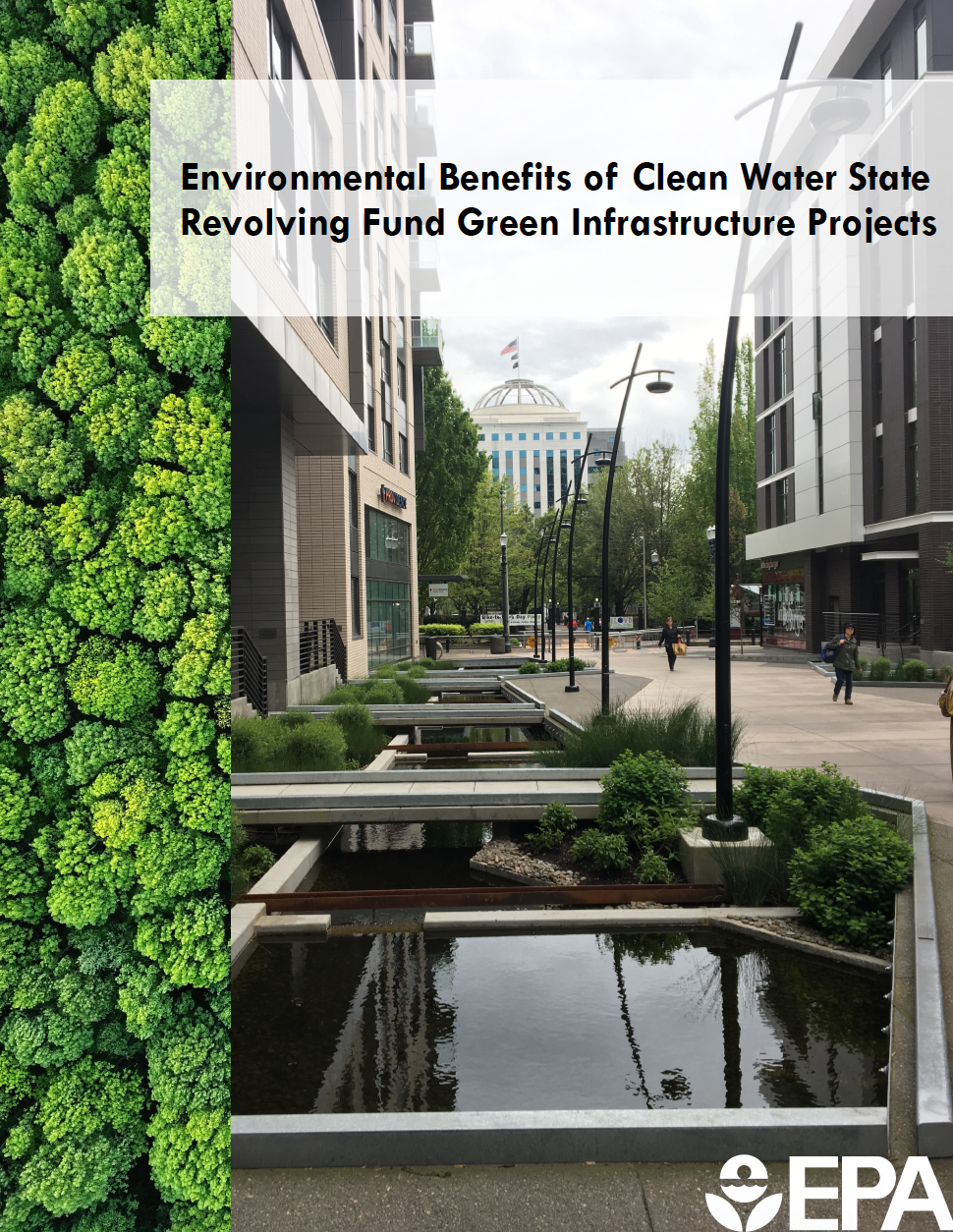 Environmental Benefits of CWSRF Green Infrastructure Projects
What are the goal and main benefits of green infrastructure? What do projects managing stormwater runoff look like? The EPA shares five case studies on CWSRF implementations for a taste of the environmental benefits of GI projects; despite their varying locations and problems, all make substantial differences in our national fight to prevent stormwater pollution.
2017 Annual Report: CWSRF Programs
 2017 Annual Report: CWSRF Programs
2017 marks the 30th anniversary of a successful Clean Water State Revolving Fund program. Read about the history of the transition from grants to CWSRF, an environmental infrastructure bank, offering below market interest rates and "additional subsidization", to accomplish a cummulative assistance of $126B thus far. After recieivng federal funding, this allowed programs to receive additional state funding three times that of the allotted federal grant, and allowing each state to focus on their area of need. Over time, CWSRF has expanded eligibility, benefited smaller communities, focused on disadvantaged communities, and brought about the Drinking Water State Revolving Fund which was established based off of CWSRF success. The Clean Water Act requires annual financial overviews of the 51 CWSRF programs under GAAP reporting. Overall, leveraged bond and net assets increased, and $7.4B in funding for this year alone. Exceptional projects are recognized in the PISCES program which can be overviewed. Finally, see state agencies that are recipients of funding.
2018 Annual Report: CWSRF Programs
 2018 Annual Report: CWSRF Programs
Read the 2018 report of CWSRF programs for an overview for the projects receiving state revolving fund assistance, and additional information such as the EPA's expanded eligibility from publicly owned treatment works to nonpoint source pollution. Learn from Vermont's strategy to utilize nonprofits to carry out SRF projects and improve ties with their program and the nonprofit community. NEP, National Estuary Programs, aiming to protect the water quality of 28 estuaries nationwide, implement long term plans (CCMP) and are also eligible for CWSRF financing. CWSRF funding may also be implementable through Watershed Financing partnerships on a project by project basis. The EPA CWSRF also encourages the use of asset management plans (AMP) as they improve the tracking of inventory, repair costs, and overall resource demands alongside emerging regulations. Recipients of funding are to use American Iron and Steel; AIS in turn has conducted over 300 training and outreach sessions. The WIFIA program has grown, saving borrowers and creating jobs for projects nationwide; the Water Infrastructure Finance and Innovation Act program is to be considered. The SRF database has been modernized and consolidated, and a new system will be in place in 2020. On another note, national aggregate financial audits reveal a $6.8B funding this year towards water quality and water infrastructure projects. See if your state/project may be a similar fit with these 15 exceptional projects. From Dodge City, Kansas, to the Texas Water Development Board, the report highlights the use of funds and their end accomplishments.
Affordable Housing Water Fixture Upgrades
Affordable Housing High-Efficiency Water Fixture Upgrades
In 2020, the City of Westminster, Colorado, launched a pilot program to upgrade water fixtures in multi-family, affordable housing buildings, free of charge.  The program is funded by the City and is implemented by Mile High Youth Corps, an AmeriCorps service organization. In its first year, Mile High Youth Corps replaced 83 toilets, 20 kitchen aerators, 84 bathroom aerators, and 8 showerheads across 72 residential units at an affordable-housing complex in Westminster. The new fixtures are all EPA WaterSense certified models that use at least 20% less water than the current industry standard with the same or better level of service.
Centering equity and affordability is a key driver of Westminster's program. The upgrades provide significant water and sewer bill savings for Maiker Housing Partners, the local Housing Authority that owns and manages the property. Staff evaluation of water savings from metered data at one of Maiker Housing Partners' locations following the efficiency upgrades show a 48% reduction of indoor water use that translates into ~$34,000 of reduced sewer bills for the 12-month billing period and ~$31,000 of reduced water bills, totaling $65,000 less on utility bills for this location. While the reduced water usage is likely not solely the result of the efficiency upgrades, they certainly played an important role. Another multi-family building that received efficiency upgrades reduced indoor water use by 18% resulting in a ~$5,000 reduction in utility bills. These utility bill savings will translate into greater access to affordable housing in Westminster, as the costs to the Housing Authority responsible for paying the water bills go down, the ability to add more units goes up. In addition, this work is cost effective. Westminster invested ~$30,000 on this project and realized a 2x return in year 1 for the customer. City staff plan to use this information to make the business case for market-rate multi-family housing owners to do similar efficiency retrofits.
This program also helps the City secure a long-term water supply for all customers. Given the community-wide water supply benefit  of water efficiency programs, the City dedicated $100,000 in year two of the program to be funded as a Capital Improvement Program (CIP) project. Treating this efficiency retrofit program just like any other capital project with long-term water supply benefits provides access to larger dollar amounts for implementation and ensures program funding can carry over year to year for the CIP term. Click the link below to download a copy of Westminster's FY21 CIP; the multi-family water conservation program is listed on page 245.
WaterNow Alliance will continue to support Westminster's development and implementation of this important equity-focused, water efficiency program. Stay tuned for updates on this evolving program. In the meantime, learn more about Mile High Youth Corps' similar work in Aurora, Colorado.
Affordability and CAP Development: Getting From Here to There
Affordability and Customer Assistance Program Development: Getting From Here to There
Janet Clements of Corona Environmental Consulting provides insights into how water and wastewater utilities can develop customer assistance programs.
https://www.youtube.com/watch?v=qK1Hir09Auc
Top 10 Trends for 2021
 Water Innovations Top 10 Trends for 2021
Water Innovation's Top 10 Trends for 2021 edition features WaterNow Alliance's article, "In the Green: Embracing Innovation To Finance The New Localized Water Infrastructure." The article details how communities are deploying localized infrastructure to meet water management needs -- extending water supply, managing stormwater, and eliminating pollutants -- and to capture multiple benefits including more equitably distributing improvements throughout a community and ensuring affordable water services. WaterNow also highlights how communities can ramp up their investments in these localized solutions by paying for them in the same way utilities pay for conventional options--with debt-financed capital budgets.
Click below to read the article.
Exploring the Green Infrastructure Workforce
 Exploring the Green Infrastructure Workforce
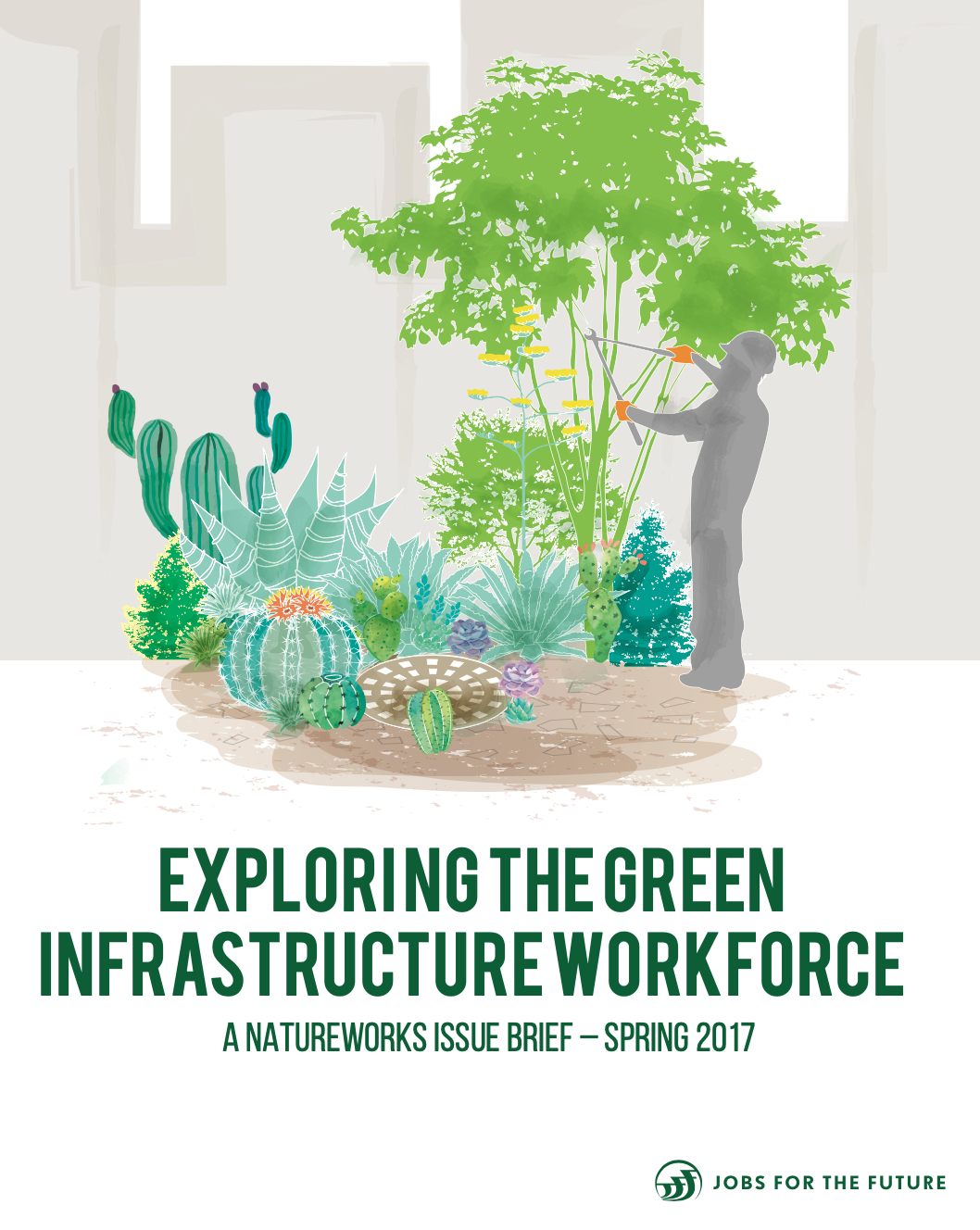
The Exploring the Green Infrastructure Workforce from Jobs for the Future, a national nonprofit that works to ensure educational and economic opportunity for all, provides a detailed examination of the workforce needed to install, maintain, and inspect green infrastructure systems, including both traditional “nature in the city” and newer, environmentally friendly approaches to stormwater management. The report explores current and emerging educational, occupational, and compensation trends and social justice opportunities nationally. It also profiles six NatureWORKS focal cities—Ann Arbor, Austin, Charlotte, Denver, Lincoln (NE), and Portland (OR)—as well as Detroit that together represent diverse geographies and approaches to green infrastructure.
Click below to download the report.
Navigating Legal Pathways to Rate-Funded CAPs
 Navigating Legal Pathways to Rate-Funded Customer Assistance Programs
This report by the UNC Environmental Finance Center and a team of national legal and finance specialists is a resource guide to help water and wastewater utilities navigate the complex legal frameworks that govern when and how these utilities can use ratepayer dollars to fund customer assistance programs. Based on these experts' research the guide presents detailed summaries of regulatory policy on the design and funding of CAPs in each of the 50 states, the District of Columbia, and Puerto Rico.
Click below to download the report.
MMSD Green Bond Framework
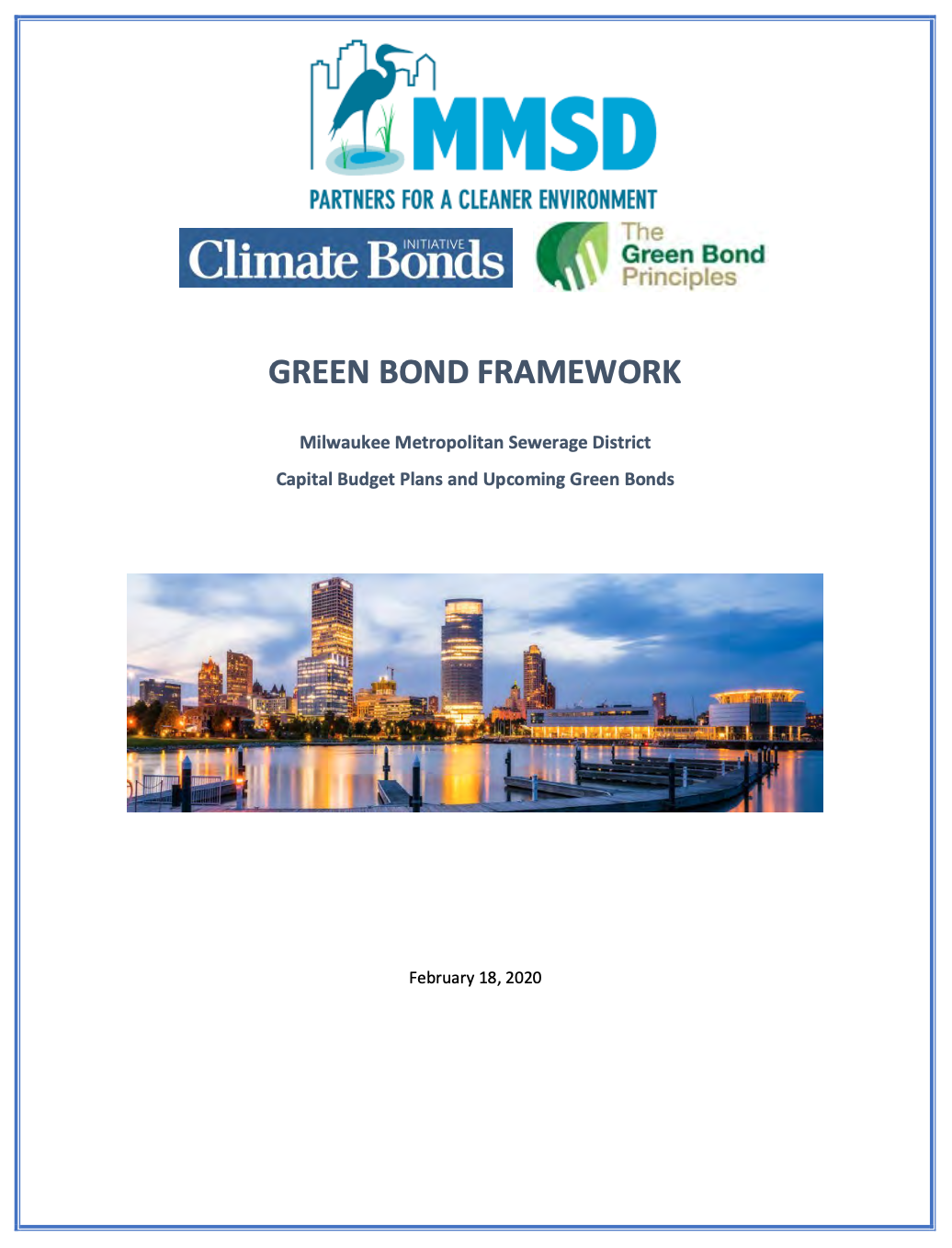 Milwaukee Metropolitan Sewerage District Green Bond Framework
In April 2020, the Milwaukee Metropolitan Sewerage District (MMSD) issued the first-ever Certified Climate Bond for a combined wastewater and stormwater program in the United States. The bond was verified by Kestrel Verifiers, a Climate Bonds Initiative (CBI) Approved Verifier, and Woman-Owned Small Business, based in the US. The proceeds will be used to finance capital projects including green infrastructure to reduce flooding and stormwater runoff.
Download the Green Bond Framework by clicking below.