State of Equity Practice in Public Sector GSI
State of Equity Practice in Public Sector GSI Report
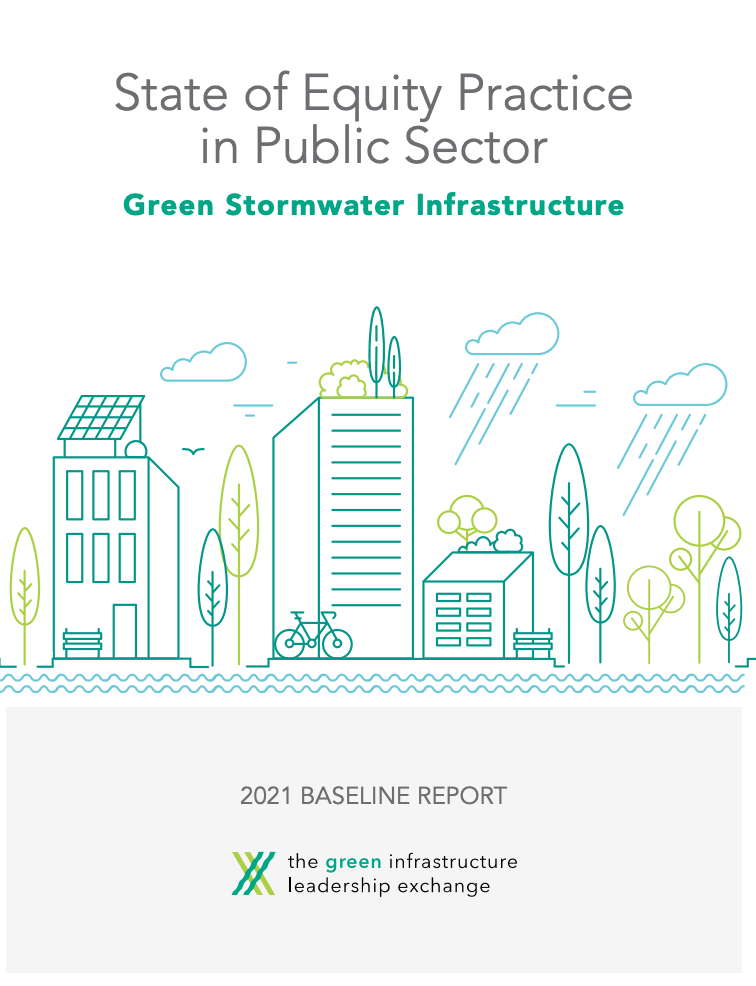 Green Infrastructure Leadership Exchange's ‘State of Equity Practice in Public Sector GSI Report’ tells the equity story of a shared vision for future investments needed to accelerate equitable implementation of GSI from the perspective of those public sector entities primarily responsible for managing stormwater. Drawing mainly from a comprehensive survey issued to capture equity-focused experiences, the report is an attempt to develop a national baseline understanding of the extent to which equity considerations are being centered within GSI planning, implementation and monitoring and are contributing towards achieving the equity objectives of communities. Future editions of this report will include additional data that informs a collective understanding of the extent to which this is playing out in different parts of the country.
Approaching GSI work with equity front of mind compels practitioners to better understand who benefits from green infrastructure and who is marginalized from these benefits. Further, it reminds practitioners that one’s race, wealth, zip code, or other forms of identity do not and should not define the benefits one receives. This report is broken into a number of sections that address different parts of the GSI lifecycle. Each section includes:
- A brief introduction to the section topic
- The presentation of public sector GSI survey results, complemented by findings from relevant external reports or research that support, refute or expand further on the survey results
- A selection of ‘spotlights’ celebrating good practices of public sector entities across the US, and
- A ‘gaps and opportunities’ table capturing practical opportunities to support the acceleration of equity-targeted actions relevant to the section focus.
Click the link below to download the full report.
Exploring GSI Funding & Financing Options for Eugene
Exploring Green Stormwater Infrastructure Funding and Financing Options for Eugene, Oregon
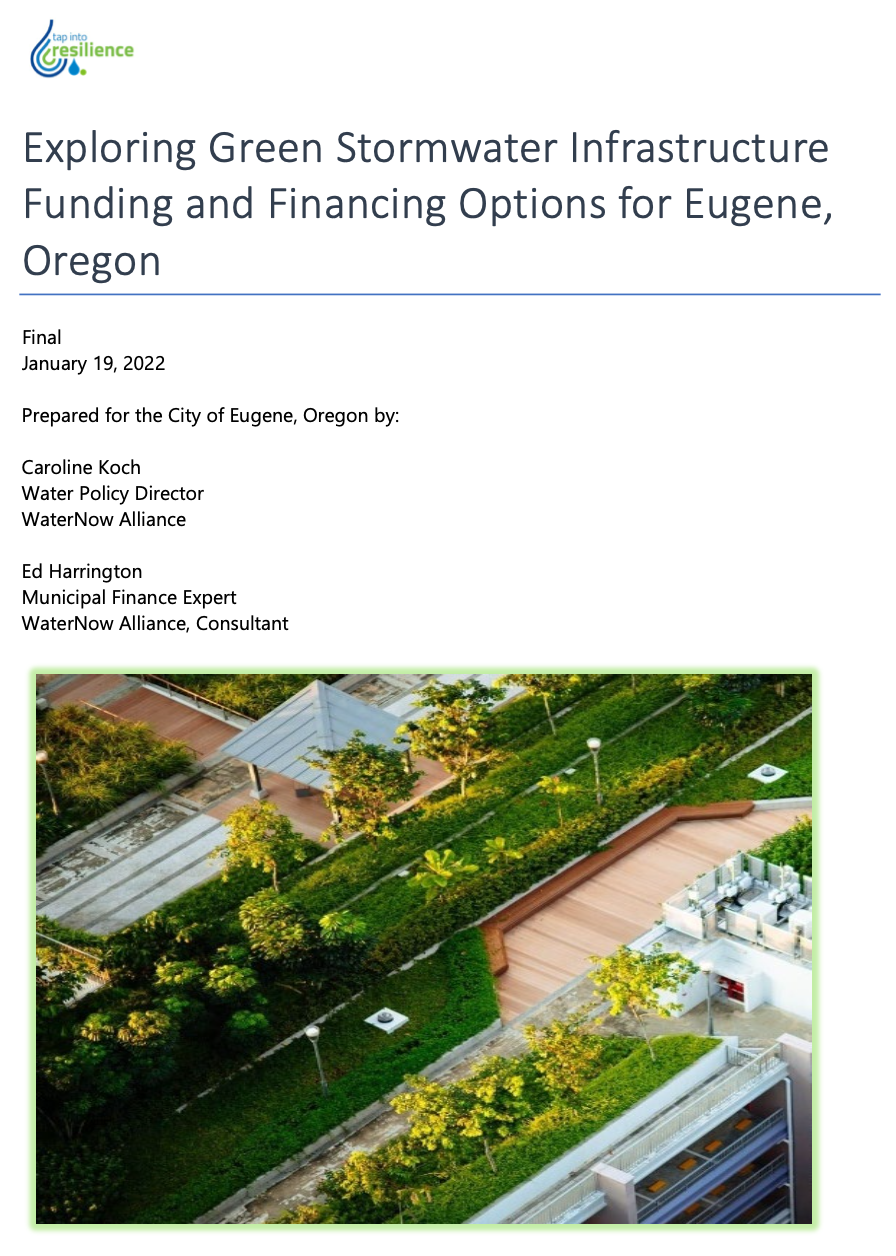 With over 400 public property GSI facilities and 1,200 private property facilities, and intentions to continue to install additional green infrastructure facilities, Eugene faces challenges with the rising cost of ongoing operation and maintenance (O&M) of public facilities and oversight of maintenance of private facilities, which are currently the responsibility of the City’s Parks and Open Space Division. To support the City’s efforts to build green infrastructure throughout the community on public and private property while meeting operation and maintenance needs, in partnership with WaterNow, American Rivers, and Corona Environmental Consulting, a multidisciplinary team of city engineers, financial managers, and GSI operators from City Public Works have been exploring funding, financing, and incentives that may be available to Eugene.
In particular, WaterNow worked with the City to explore funding and financing options for addressing the rising cost of GSI facility maintenance and to further enhance investment in GSI facilities on public and private property for accelerated environmental benefits. This report details WaterNow’s exploration of approaches to closing the identified funding gap for ongoing O&M costs, examination of Eugene’s options to leverage municipal bonds or other forms of debt to finance capital investments in public and private GSI facilities, and provides a hypothetical example of how Eugene might finance an enhanced GSI program.
Click the link below to download the full report.
Debt Funding for Water Conservation Programs
Debt Funding for Water Conservation Programs
The cheapest and quickest way for cities and towns is to use less “grey” infrastructure and concentrate on conservation, efficiency, and green infra- structure. But 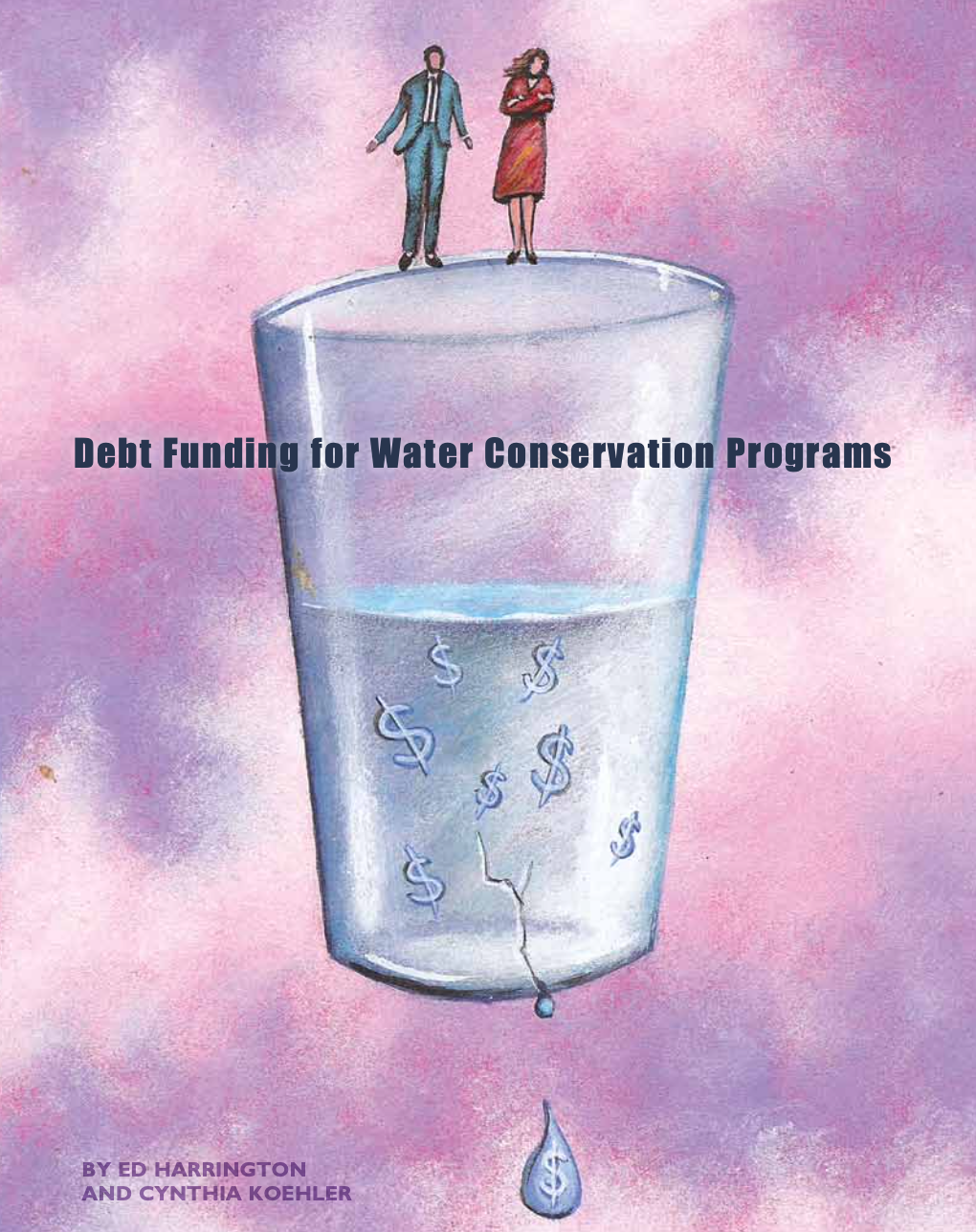 those solutions can be hard to implement on a large scale. Sometimes it is because engineers are more comfortable knowing what will happen with pumps and pipes. But often it is because we can’t figure out ways to fund large investments in things that don’t look like the assets we used to build. Many water agencies are effectively dealing with water shortages or growth in their service areas by creating “new” water out of already-developed supplies. A number of agencies have “turf buy-back” programs that will pay customers to replace their lawns with low-water-use landscaping. Others are starting major programs to provide efficient washing machine, toilet, and greywater reuse system rebates. Others are providing property owners and developers with incentives to install stormwater capture systems. Each of these actions creates mini-reservoirs that collectively provide substantial public benefits to local water utilities and their ratepayers. To really make a difference, these programs need to be larger than what can usually be funded through an agency’s operating budget without an unwelcome large increase in rates. That is why it is so important to consider how to use debt funding as part of the capital program, allowing the costs to be spread over the life of the benefits.
This report outlines how water utilities can debt fund water conservation programs. Click the link below to download the full report.
Compendium of Debt-Financing Options
Compendium of Debt-Financing Options for Scaled Investments in Distributed Green Stormwater Infrastructure
A Quick Reference Guide for Green Bay, Sheboygan & Mid- Sized Wisconsin Cities
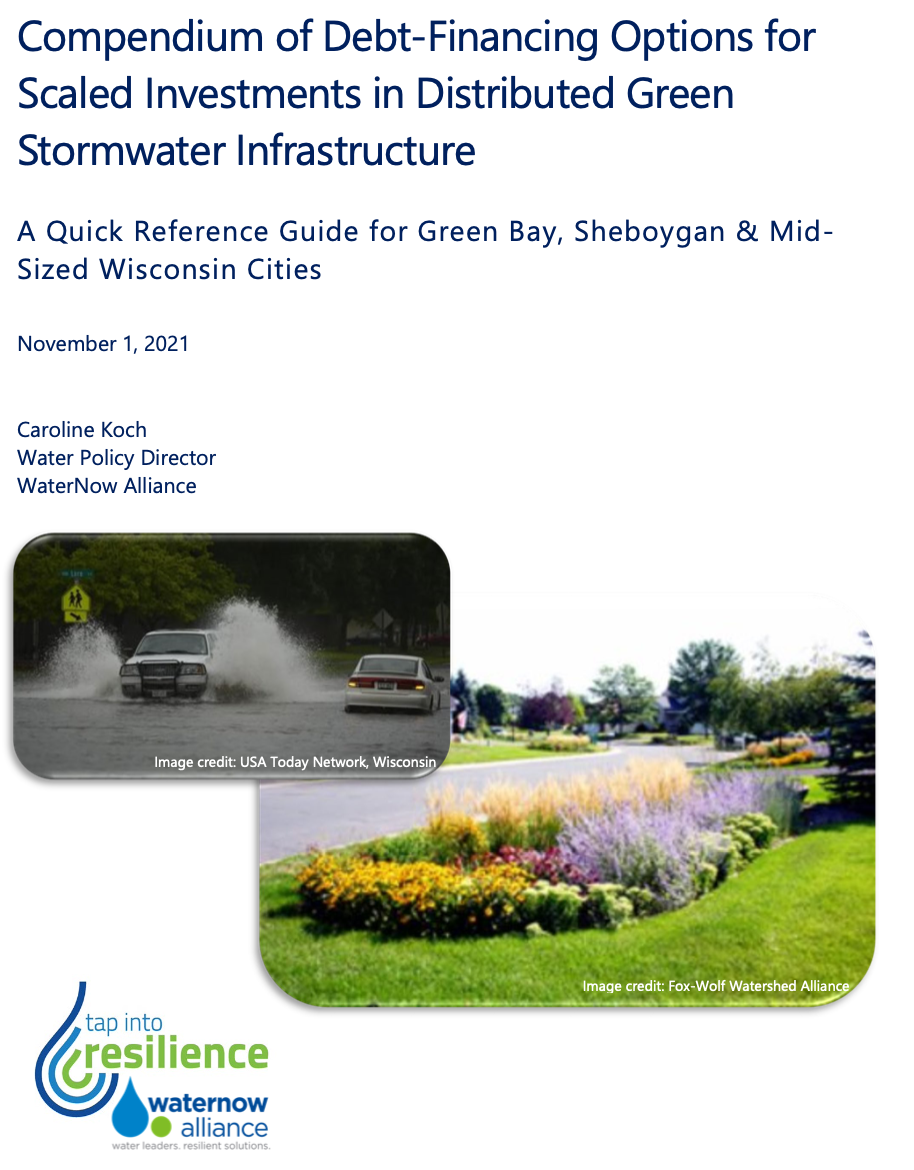 WaterNow Alliance, in partnership with the City of Sheboygan, the City of Green Bay, American Rivers, and Corona Environmental Consulting, has prepared this compendium of debt-financing and other alternative financing options as a quick reference guide to the options available to mid-sized Wisconsin cities to debt finance capital investments in distributed green stormwater infrastructure (GSI) on both public and private property. The compendium includes summaries of available financing options and high level legal and accounting analysis of Wisconsin state public finance laws governing capital investments to provide a basis for debt-financing investments in distributed GSI.3 The financing options detailed in the compendium are listed in the right. It also includes preliminary assessments of how Green Bay and Sheboygan (the Cities) could leverage these financing options scaling their distributed GSI programs.
Tailored to the City of Sheboygan, City of Green Bay, and other similar Wisconsin cities,’ the report is designed for local stormwater managers and decision makers exploring new or expanded distributed GSI programs and are interested in an introduction to potential financing options.
Funding and Financing Countywide GSI Investments
Funding and Financing Countywide Green Stormwater Infrastructure Investments
An Exploration of Options for Investing in Regional-Scale and Parcel-Scale GSI throughout San Mateo County
The City/County Association of Governments of San Mateo County (C/CAG) implements the San Mateo Countywide 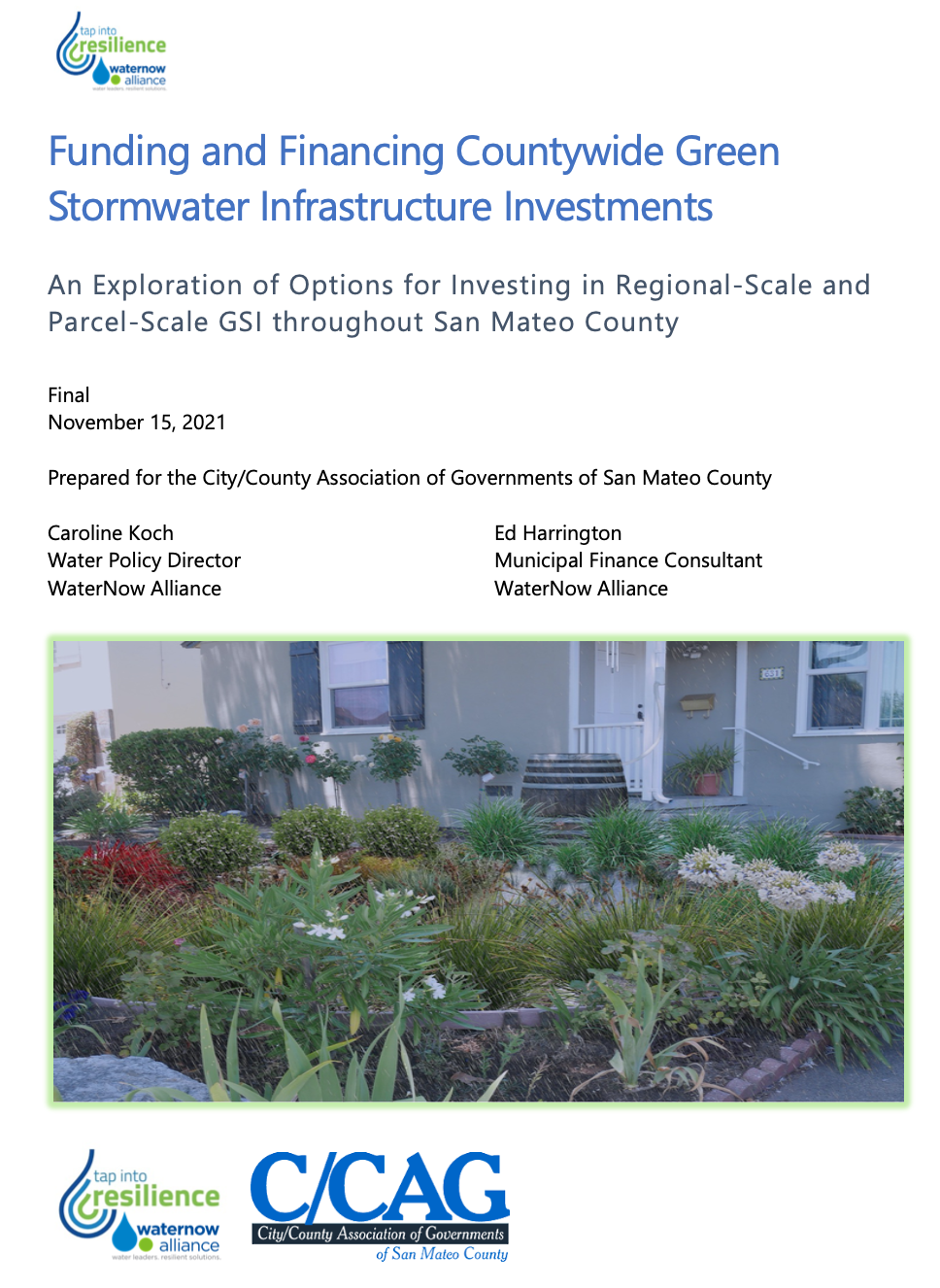 Water Pollution Prevention Program (SMCWPPP) established in 1990 to reduce the pollution carried by stormwater into local creeks, the San Francisco Bay, and the Pacific Ocean in partnership with each incorporated city and town in the county, and the County of San Mateo, which share a common National Pollutant Discharge Elimination System (NPDES) Municipal Separate Storm Sewer System permit. As part of the SMCWPPP implementation, C/CAG is working to advance regional-scale and distributed, parcel-scale green stormwater infrastructure (GSI) projects in San Mateo County by developing a Regional Collaboration Program Framework to describe a countywide stormwater program focused on both potential regional projects and distributed green infrastructure implemented by private sector developers that can provide water quality and resiliency benefits. C/CAG is also working to identify potential funding and financing mechanisms to implement the strategies to be identified in the Regional Collaboration Program Framework.
As part of WaterNow’s Tap into Resilience (TiR) initiative, this report details WaterNow’s initial legal and accounting analyses of the potential funding and financing options available to C/CAG, its members, and possible regional partners to inform and advance San Mateo County’s increased investments in countywide regional-scale green infrastructure as well as parcel-scale green infrastructure. This report also explores a hypothetical spending plan for a large-scale green stormwater infrastructure program in San Mateo County that includes multiple regional-scale and robust investment in distributed, parcel-scale projects built over a 20 year timeline.
Building Blocks of Trust
Based on interviews with successful community and water utility partnerships, River Network and WaterNow have developed a set of 8 best practices for building trusting partnerships:
- Prioritize Transparency and Accountability
- Restore Community Confidence
- Deepen Community Understanding of Utilities Roles and Responsibilities
- Highlight Shared Goals to Leverage Mutual Benefits
- Include the Community as Part of Utility Decision Making
- Adopt a Community-Facing Orientation
- Cultivate Long-Term Community Relationships with Intention
- Build from Personal to More Formalized Relationships
These foundational steps for building trust are a constellation of practices that can be applied in any order depending on where a particular utility and community fall on the trust spectrum.
Click the link below to download a 2-page summary of the Building Blocks of Trust report. Click here to read the full report.
Strengthening Utilities Through Consolidation
Strengthening Utilities Through Consolidation: The Financial Impact
This US Water Alliance and UNC Environmental Finance Center report synthesizes the body of evidence about the financial outcomes possible
 with water utility consolidation, and examines the experiences of eight communities who consolidated utility service in different ways and for different reasons. With this report, the US Water Alliance and the Environmental Finance Center aspire to fill the gap in current research about the economic attributes associated with different consolidation models and help communities understand the opportunities, tradeoffs, and financial impacts of consolidation.
Click the link below to read the full report.
Green Stormwater Infrastructure: Impact on Property Values
Green Stormwater Infrastructure: Impact on Property Values
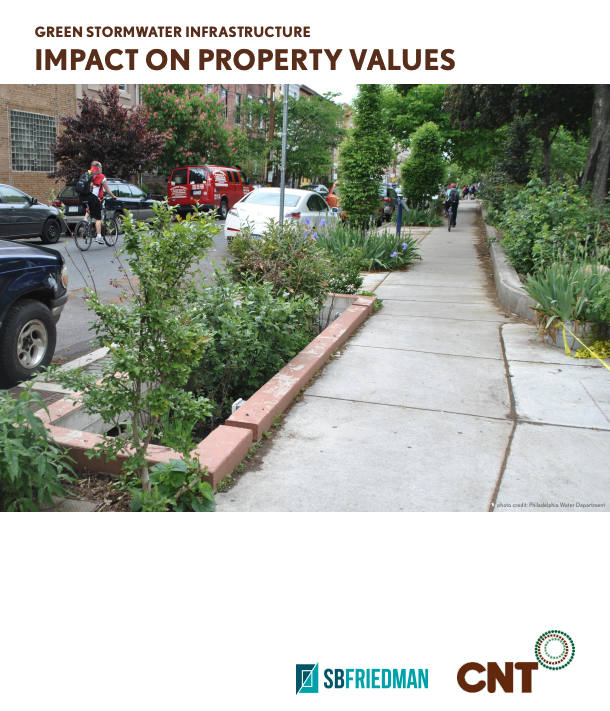 This Center for Neighborhood Technology and SB Friedman Development Advisors report shows that GSI also adds value to homes based on modeling of the impact of GSI installations, such as rain gardens and swales, on property sales data in two cities that showed statistically significant higher sales prices of homes near GSI. These findings add to a growing body of research that shows that nature-based solutions to stormwater management provide many benefits in addition to flood control. In particular, the study found that doubling the square footage of rain gardens, swales, planters, or pervious pavement near a home is associated with a 0.28% to 0.78% higher home sale value, on average.
Click the link below to read the full report and learn about the implications of these increased property values.
Renewing the Water Work Force
Renewing the Water Work Force: Improving Water Infrastructure and Creating a Pipeline to Opportunity
 This Brookings Institute report provides an in-depth exploration of the water workforce to uncover the accessible, well-paying opportunities in water sector. Key findings include:
- Water occupations not only tend to pay more on average compared to all occupations nationally, but also pay up to 50 percent more to workers at lower ends of the income scale.
- In 2016, nearly 1.7 million workers were directly involved in designing, constructing, operating, and governing U.S. water infrastructure, spanning a variety of industries and regions.
- Most water workers have less formal education, including 53 percent having a high school diploma or less. Instead, they
require more extensive on-the-job training and familiarity with a variety of tools and technologies. - Water workers tend to be older and lack gender and racial diversity in certain occupations; in 2016, nearly 85 percent of them were male and two-thirds were white, pointing to a need for younger, more diverse talent.
Based on these findings and dozens of conversations with utility leaders and other workforce groups, the report lays out a new water workforce playbook for public, private, and civic partners to use in future hiring, training, and retention efforts.
Click the link below to download the full report.
Pathways for Localized Water Infrastructure
Tap into Resilience: Pathways for Localized Water Infrastructure
 Building on a 2019 dialogue hosted by University of Irvine School of Law's Center for Land, Environment, and Natural Resources and WaterNow Alliance, this report focuses on the considerable and largely overlooked opportunities presented by localized water infrastructure—distributed systems that extend beyond centralized water infrastructure and are located at or near the point of use.
The report makes nine recommendations and identifies roughly two dozen achievable, practical action items to overcome the financing, institutional, and legal and policy barriers to largescale adoption of LWI. These recommendations and action items set a foundation for expanding access to and understanding of LWI in an effort to catalyze and accelerate the shift towards sustainable, climate resilient, affordable, and equitable water solutions.
Click the link below to access the full report. Click here to read the Executive Summary.